During World War II, aviation changed almost every part of the war effort. Aircraft carried supplies, supported troops, moved equipment, trained pilots, and connected factories, airfields, and military bases across the country. But WWII aviation was not only shaped by combat missions overseas. It was also shaped by training fields on the American home front, where pilots learned the discipline, skill, and courage required to fly military aircraft during wartime.
One of those places was Avenger Field in Sweetwater, Texas.
Avenger Field became one of the most important sites in the story of WWII aviation because it served as the training base for the Women Airforce Service Pilots, known as the WASP. At a time when the United States needed more pilots to support the war effort, women pilots came to Sweetwater to train, serve, and prove that they belonged in the cockpit of military aircraft.
Avenger Field became a WWII aviation training hub because it provided the setting for one of the most groundbreaking pilot training programs of the war: the Women Airforce Service Pilots. It became the only all-female WASP base, with training conducted at Avenger Field and nearby auxiliary fields. (National WASP WWII Museum)
What Was Avenger Field?
Avenger Field was a wartime aviation training field in Sweetwater, Texas. Today, it is best remembered as the home of the Women Airforce Service Pilots training program and the site of the National WASP WWII Museum.
Before it became a nationally significant WWII aviation site, Avenger Field was part of a much larger wartime need. The United States needed trained pilots, functioning airfields, instructors, mechanics, aircraft, and support personnel. Airfields across the country became part of a home front aviation network that helped prepare the nation for the demands of modern war.
Avenger Field’s lasting importance comes from its connection to the WASP. According to the National WASP WWII Museum, Avenger Field became the only all-female WASP base, and all flight training from primary through advanced instruction was conducted there or at auxiliary fields in the surrounding area. Eighteen WASP classes graduated from the program. (National WASP WWII Museum)
That made Sweetwater more than a stop on the map. It made the city part of WWII aviation history.
Why Sweetwater, Texas Was Suited for WWII Aviation Training
WWII aviation training required space, routine, discipline, and repeated practice. Pilots needed room to fly, land, drill, make mistakes, correct them, and develop confidence in the air. Sweetwater offered the kind of open West Texas environment that made intensive flight training possible.
The location also placed trainees in a setting where the focus was clear. Avenger Field was not simply a place where women came to fly; it was a place where they were expected to train under military-style standards. The field became a controlled, demanding environment designed to prepare pilots for the real responsibilities they would carry after graduation.
For the women who arrived in Sweetwater, the experience was both practical and historic. They came with flying experience, but Avenger Field shaped that experience into wartime service. They learned not only how to handle aircraft, but how to operate within the expectations of military aviation.
Why was Avenger Field important to WWII aviation?
Avenger Field was important because it became the central training site for WASP pilots, connecting Sweetwater, Texas to the broader World War II aviation effort.
How WWII Aviation Training Worked at Avenger Field
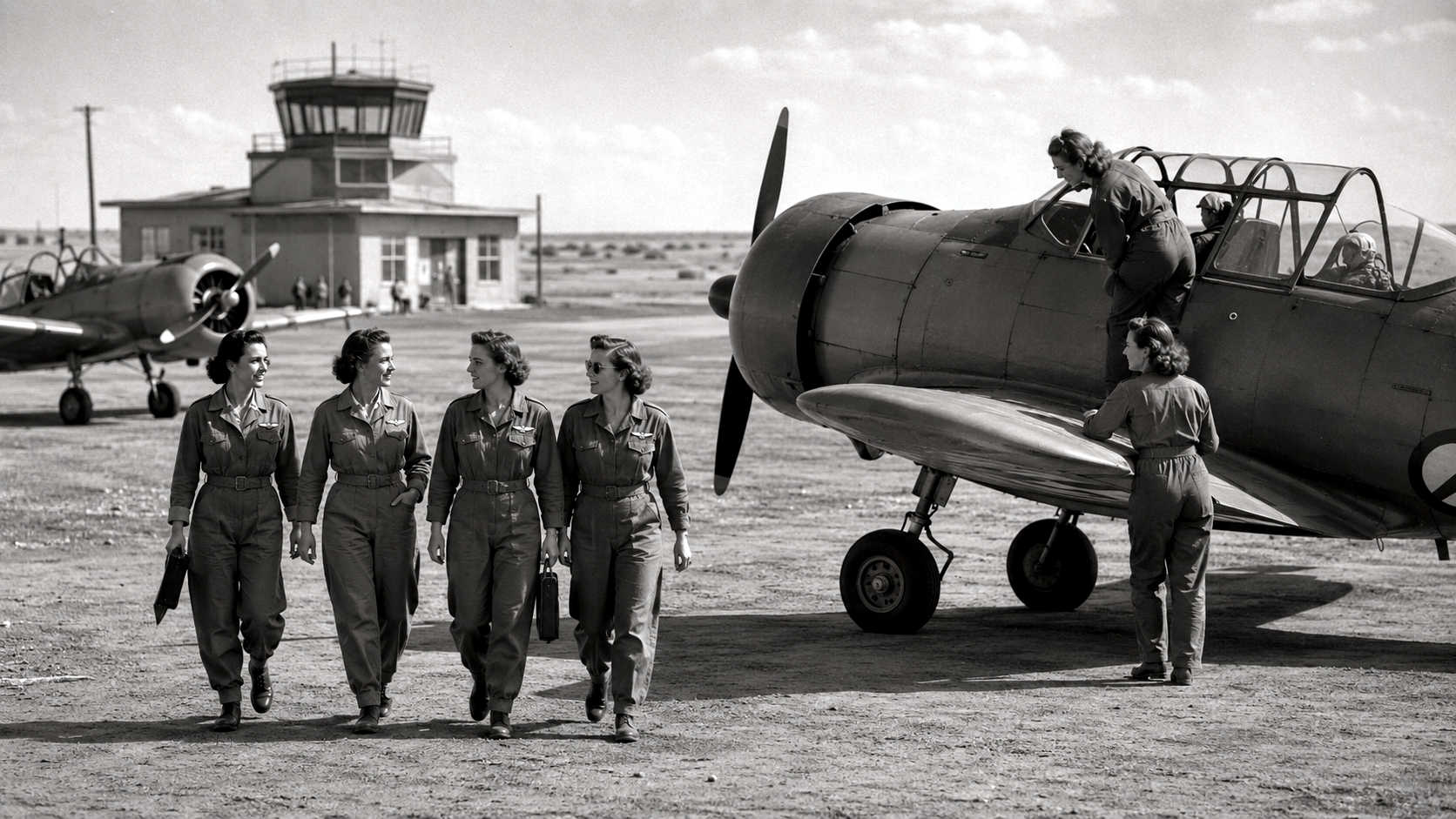
Training at Avenger Field was serious, structured, and demanding. WASP trainees completed flight instruction, ground school, drills, inspections, and military-style routines. The goal was not simply to produce capable pilots. The goal was to prepare women to fly military aircraft in support of the wartime aviation system.
The National Park Service notes that WASP trainees completed hundreds of hours of flight drills and ground school at Avenger Field and followed Army discipline, including marching, infantry drills, and inspections. (National Park Service)
This training reflected the urgency of WWII aviation. The country needed pilots who could ferry aircraft, support training programs, test aircraft, and take on other domestic flying duties. Every aircraft moved, every mission supported, and every hour in the air mattered.
Ground school was just as important as flight time. Trainees studied the information needed to understand aircraft, navigation, weather, procedures, and safe flying. In the air, they developed the skills and confidence needed to operate military aircraft under demanding conditions.
From Primary to Advanced Flight Training
One of the reasons Avenger Field stands out in WWII aviation history is that WASP training became concentrated there. Instead of serving as only one step in the process, Avenger Field became the center of the program.
According to the National WASP WWII Museum, Avenger Field was the only all-female WASP base, and flight training from primary through advanced levels took place there or at nearby auxiliary fields. (National WASP WWII Museum)
That detail matters.
Primary training introduced pilots to the foundation of military flying. Advanced training pushed them further, preparing them for more complex aircraft, procedures, and responsibilities. By keeping the full training process centered around Avenger Field, Sweetwater became a defining location in the WASP story.
Did WASP pilots complete all of their training at Avenger Field?
The National WASP WWII Museum states that Avenger Field became the only all-female WASP base, with training from primary through advanced instruction conducted there or at nearby auxiliary fields. (National WASP WWII Museum)
The Women Airforce Service Pilots at Avenger Field
The Women Airforce Service Pilots were women who trained to fly military aircraft in non-combat roles during World War II. They were already experienced pilots before entering the program, but their time at Avenger Field prepared them for a different kind of flying.
The WASP helped meet a practical wartime need. Male pilots were needed for combat assignments overseas, while military aircraft still had to be moved, tested, and flown across the United States. The WASP stepped into that gap.
Their work included ferrying aircraft, supporting training operations, flight-testing aircraft, and performing other stateside aviation duties. The National Women’s History Museum notes that 1,074 women served as WASP during World War II and that they completed rigorous training at Avenger Field before serving in non-combat missions across the United States. (National Women’s History Museum)
Their service was not symbolic. It was operational. It helped keep aircraft moving and helped support the aviation demands of a nation at war.
Daily Life for WASP Trainees in Sweetwater
Life at Avenger Field was not easy. The women trained in a structured military environment, followed strict schedules, and faced the pressure of proving themselves every day.
Texas Woman’s University, home of the official WASP archive, explains that WASP training began in Wilmington, Delaware, and Houston, Texas, before relocating to Sweetwater. (Texas Woman’s University) Once in Sweetwater, trainees became part of a program known for discipline, physical demands, and intense preparation.
They marched. They studied. They flew. They lived with the daily rhythm of a wartime training field.
The National Museum of the United States Air Force describes WASP trainees at Avenger Field participating in daily fitness drills and ground school courses. (Air Force Museum) These details help modern readers understand that Avenger Field was not simply a flight school. It was a place where women were trained to meet military expectations in a country that had not yet fully accepted women as military pilots.
That tension is part of what makes the story so powerful. The trainees were asked to serve with discipline and skill, even while fighting for recognition in a system that classified them differently from their male counterparts.
Why Avenger Field Was Different from Other WWII Aviation Sites
Many American airfields played important roles in WWII aviation. Some trained pilots. Others supported aircraft production, testing, transport, or maintenance. Avenger Field was different because it became the only all-female training base for the WASP.
That distinction gave the field a unique place in aviation history.
At Avenger Field, women trained together, lived together, and graduated into assignments that connected them with military bases across the country. The field became a symbol of what women pilots could do when given the opportunity, structure, and responsibility to serve.
It also became a place where barriers were challenged in the air, not just in speeches or policy debates. Every takeoff, every drill, every completed course, and every graduating class added to the evidence that women could meet the demands of military aviation.
Avenger Field’s Role After Training
Training in Sweetwater was only the beginning. After graduation, WASP pilots left Avenger Field for duty assignments across the United States.
The National Museum of the United States Air Force states that, after graduating from Avenger Field, WASP were stationed at more than 100 bases across the country. (Air Force Museum)
That national reach shows why Avenger Field mattered beyond Sweetwater. The training that happened in West Texas supported a much larger aviation system. Graduates carried their skills to bases where they helped ferry aircraft, support operations, and keep wartime aviation moving.
In that way, Avenger Field was both local and national. Its runways were in Sweetwater, but its impact stretched across the United States.
The Risks and Realities of WWII Aviation Training
WWII aviation carried real risk. Aircraft technology was advancing quickly, training schedules were demanding, and pilots often faced challenging conditions. Even stateside flying could be dangerous.
For WASP trainees, the pressure was intense. They were learning military procedures, adapting to new aircraft, and training in a culture where they had to prove their ability again and again. The work required physical stamina, technical skill, mental focus, and courage.
Aviation training during World War II was not a ceremonial contribution to the war effort. It was serious work. Mistakes could have consequences. Weather, equipment, fatigue, and the demands of wartime schedules all shaped the training environment.
Why was WWII aviation training dangerous?
WWII aviation training was dangerous because pilots faced demanding schedules, aircraft limitations, unpredictable weather, mechanical risks, and the pressure of preparing quickly for wartime aviation duties.
Preserving Avenger Field’s WWII Aviation Legacy Today
Today, Avenger Field remains an important place of memory. It is the home of the National WASP WWII Museum, where the stories of the Women Airforce Service Pilots are preserved and shared with new generations.
The museum helps visitors understand the human side of WWII aviation. Aircraft and artifacts tell part of the story, but so do photographs, letters, uniforms, records, oral histories, and personal memories. Together, they show what it meant for women to train, serve, and contribute at a time when their work was essential but often underrecognized.
The Portal to Texas History describes the National WASP WWII Museum as a teaching museum located at Avenger Field in Nolan County, Texas, with archives, exhibits, and oral histories that preserve the legacy of the Women Airforce Service Pilots. (The Portal to Texas History)
That preservation matters because WWII aviation history is not complete without Avenger Field. It is not complete without the women who trained there. It is not complete without the story of Sweetwater, Texas, and the role this community played in preparing pilots for service.
Why Avenger Field Still Matters to WWII Aviation History
Avenger Field matters because it represents the intersection of wartime need, aviation training, women’s service, and home front contribution. It reminds us that WWII aviation was not only built in factories or tested in combat. It was also shaped on training fields where pilots learned to fly with discipline, purpose, and resolve.
For the WASP, Avenger Field was a place of challenge and transformation. It was where experienced women pilots became part of a national aviation effort. It was where they trained under military-style expectations, formed lifelong bonds, and prepared for assignments that supported the war from within the United States.
For Sweetwater, Avenger Field became a lasting connection to one of the most important aviation stories of World War II.
For visitors today, the field offers something rare: a chance to stand where history happened and understand how a group of women helped change the future of American aviation.
Frequently Asked Questions About WWII Aviation at Avenger Field
What was Avenger Field used for during World War II?
Avenger Field was used as the training base for the Women Airforce Service Pilots during World War II. It became the only all-female WASP training base, with flight training conducted there and at nearby auxiliary fields.
Why was Sweetwater, Texas important to WWII aviation?
Sweetwater became important to WWII aviation because Avenger Field served as the central training site for WASP pilots, connecting the Texas home front to the national wartime aviation effort.
Who trained at Avenger Field?
The Women Airforce Service Pilots trained at Avenger Field. These women were already experienced pilots before entering the program and completed additional military-style flight training in Sweetwater.
What kind of training happened at Avenger Field?
Training included flight drills, ground school, military-style routines, inspections, marching, fitness drills, and other instruction designed to prepare women pilots for aviation support duties.
Was Avenger Field only for women pilots?
During its WASP training period, Avenger Field became the only all-female WASP base. That distinction made it different from other WWII aviation training sites.
What happened after WASP pilots graduated from Avenger Field?
After graduating from Avenger Field, WASP pilots were assigned to bases across the United States, where they supported wartime aviation through ferrying, testing, training support, and other non-combat flying duties.
What is at Avenger Field today?
Today, Avenger Field is home to the National WASP WWII Museum, which preserves the history of the Women Airforce Service Pilots through exhibits, aircraft, archives, artifacts, and educational programs.
Conclusion: Why Avenger Field Still Matters
WWII aviation was shaped by many places, from combat zones overseas to training fields across the American home front. Avenger Field in Sweetwater, Texas, holds a special place in that history because it became the training ground for the Women Airforce Service Pilots.
The women who trained there helped meet a national need. They flew, studied, marched, served, and proved that they could handle the demands of military aviation. Their work supported the war effort and helped open the door for future generations of women in flight.
Today, the National WASP WWII Museum continues to preserve that legacy at the very place where so much of it unfolded. Avenger Field remains a reminder that history is not only found in famous battles or distant skies. Sometimes, it is found on a runway in West Texas, where courage took flight.