Education

The National WASP WWII Museum provides educational programming for everyone. Contact us through this website or by calling 325-235-0099 for information about booking group tours.

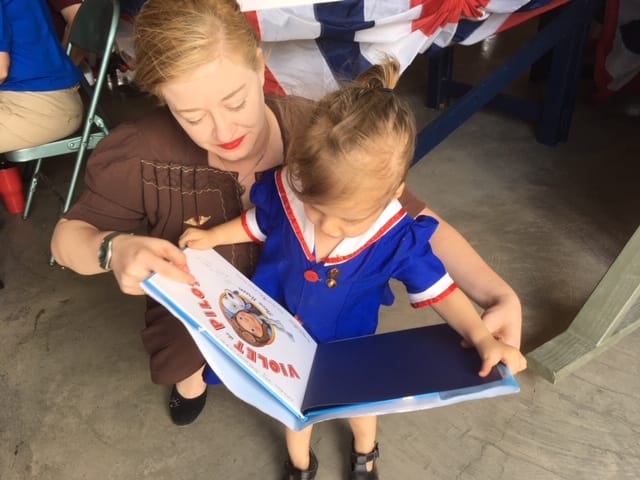
The State of Texas Assessments of Academic Readiness (STAAR™) connected tours are currently available for students in 5th, 8th and High School American History. Teachers of elementary students in grades two through four may request a tour focusing on the life of WASP Charlyne Creger which features a story plus original photographs and memorabilia from her life.

Try to book your tour at least two weeks in advance. Schools may schedule any day and time during school hours. We welcome tours on weekends as well. There is no charge for tours.

Fifi’s Suitcase

Check out this new resource from the National WASP WWII Museum: Fifi’s Suitcase.

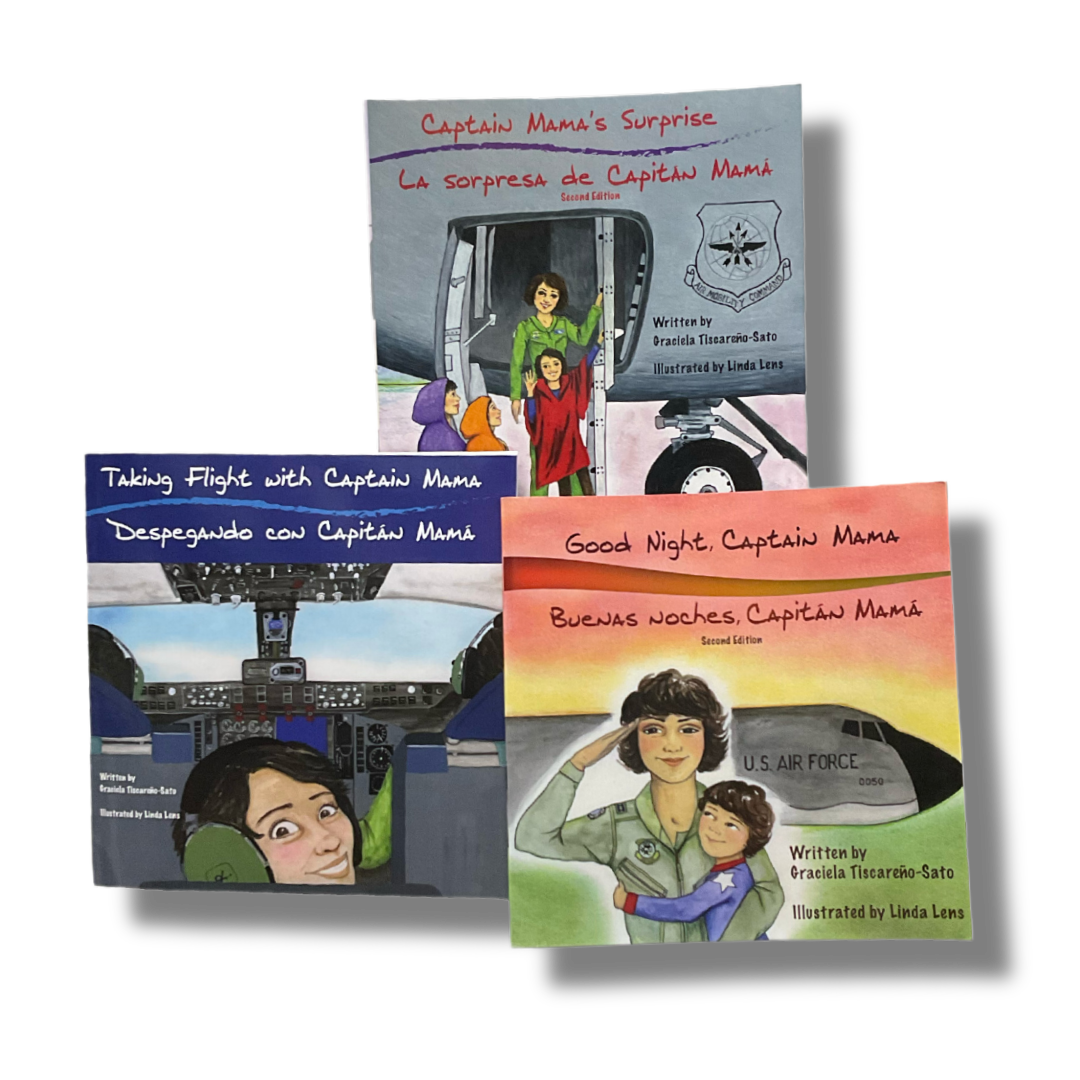
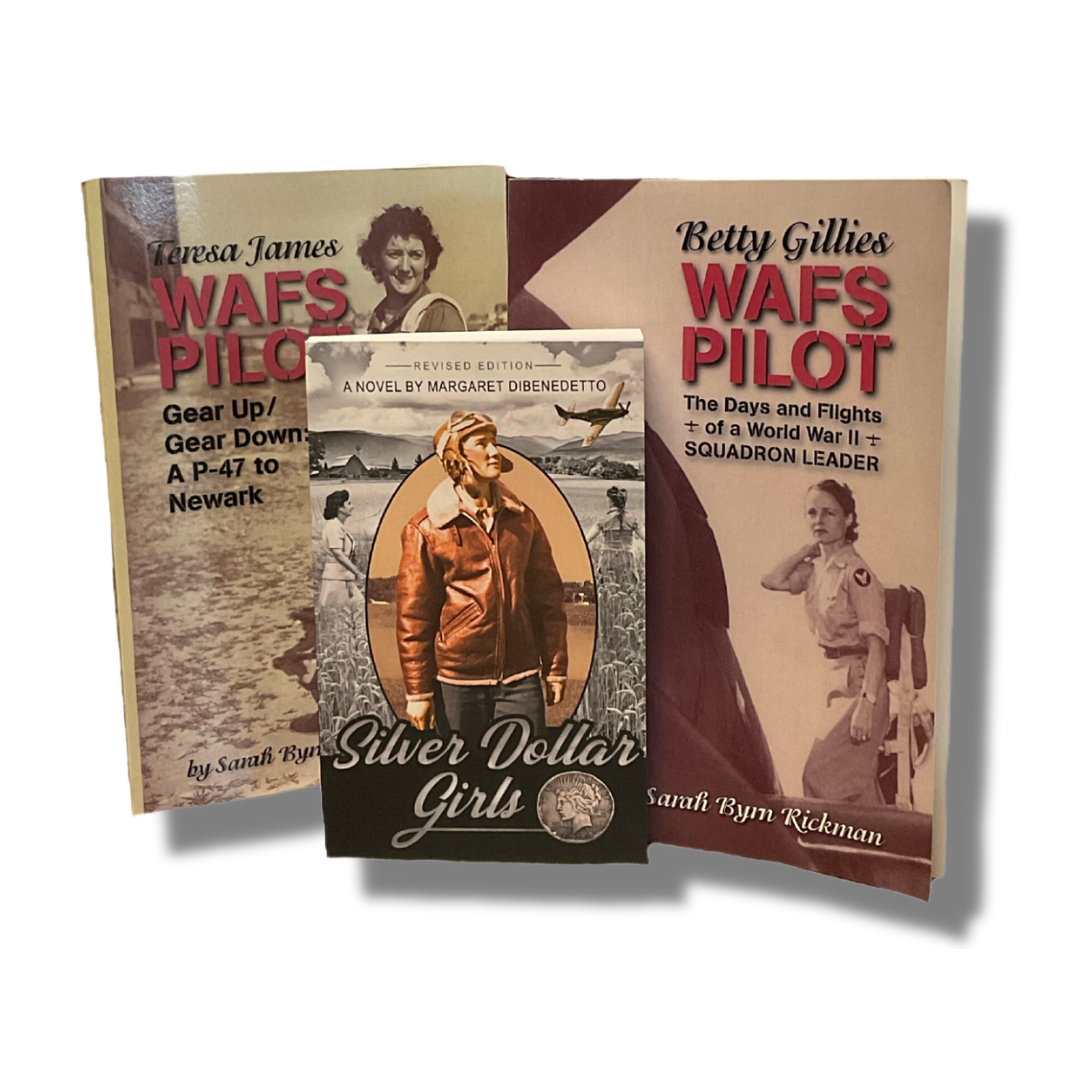
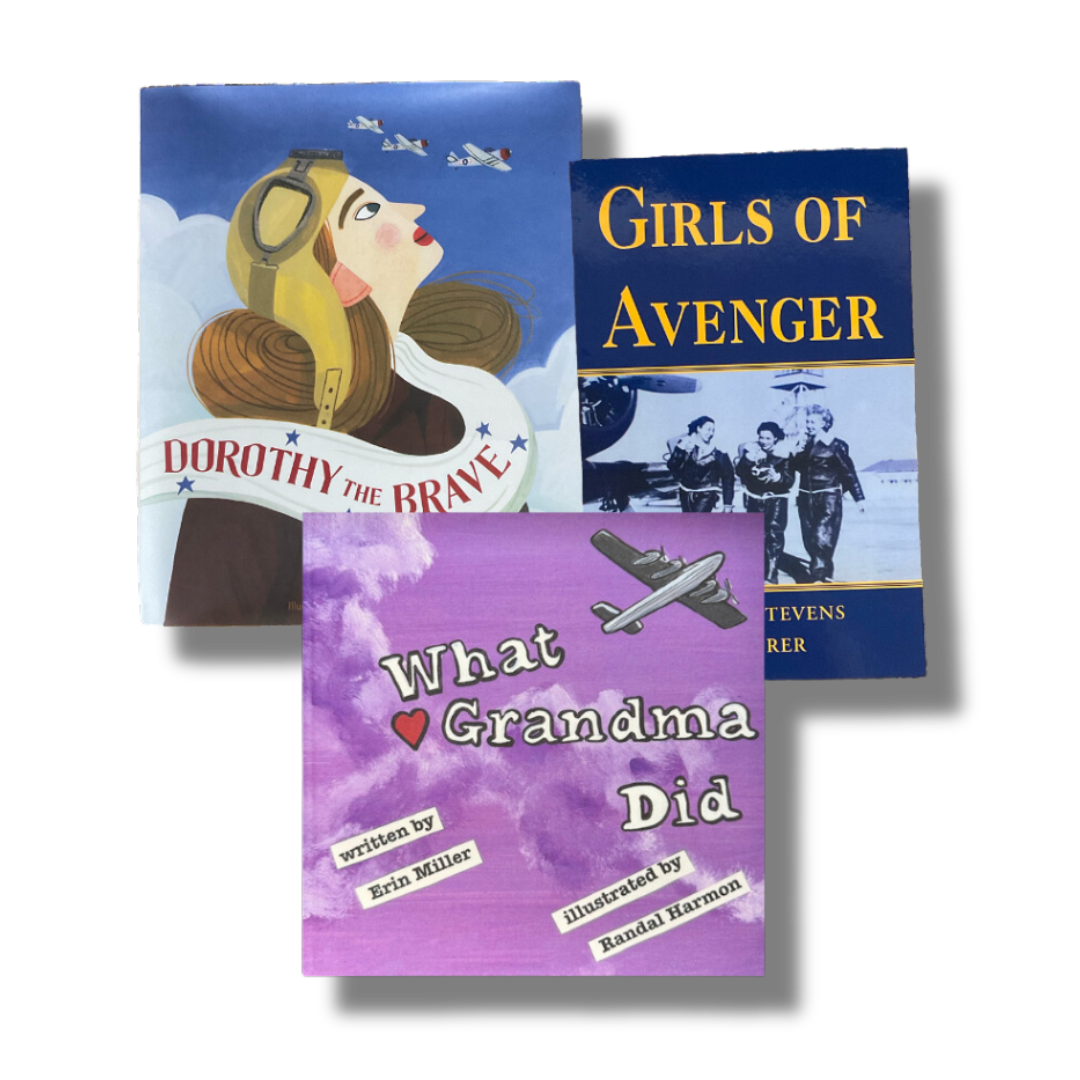
A treasure trove of lesson plans, books, photographs, artifacts and even clothing, Fifi’s Suitcase serves students in elementary and secondary grades. Lesson plans specifically geared for third and fifth graders include the following:

Lesson plans for grades eight and high school American History substitute a lesson on navigation for the ration books and recipes.

Lessons can be adapted for other grades.

The suitcases get their name from the WASP mascot designed by Walt Disney Studios. Fifi is short for Fifinella, the female counterpart of Gremlins. Learn more about gremlins and fifinellas (and widgets, too) in the book by Roald Dahl: The Gremlins. Fifi makes her debut in this wonderful tale told by a former Royal Air Force pilot and future writer of Charlie and the Chocolate Factory.

Call the Museum at 325.235.0099 to book a week with this fun new resource. Let us know if you need the elementary or secondary level suitcase. The Region XIV Education Service Center van will deliver it to your school.

Reference Materials Available at the County- City Library Sweetwater, Texas

Alexander, Thomas E. The Wings of Change: The Army Air Force Experience During World War II. Abilene, TX: McWhiney Foundation Press, McMurry University, 2003.

Bostwick, Marie. On Wings of the Morning. Kensington Publishing Corporation, 2007.

Carl, Ann B. A WASP Among Eagles: A Woman Military Test Pilot in World War II. Washington: Smithsonian Institution Press, l999.

Cochran, Jacqueline. The Stars at Noon. Boston: Little, Brown and Company, l954.

Cole, Jean Hascall. Women Pilots of World War II. University of Utah Press, l992.

Dahl, Roald. The Gremlins. Milwaukie, OR: Dark Horse Books, 2006.

Dailey, Janet. Silver Wings, Satiago Blue. New York: Poseidon Press, l984.

Gott, Kay. Women in Pursuit. McKinleyville, CA: Author, l993.

Granger, Byrd Howell. On Final Approach: The Women Airforce Service Pilots of WWII. Scottsdale, AZ: Falconer Publishing Company, l991.

Haynsworth, Leslie. Amelia Earhart’s Daughters: The Wild and Glorious Story of American Women Aviators from World War II to the Dawn of the Space Age. N.Y.: William Morrow, l998.

Keene, Julia Moberg. Skies over Sweetwater. Warwick, N.Y.: Keene Publishing, 2008.

Keil, Sally Van Wagenen. Those Wonderful Women in their Flying Machines: The Unknown Heroines of World War II. New York: Rawson, Wade Publishers,1979.

Langley, Wanda. Flying Higher: The Women Airforce Service Pilots of World War II. North Haven, Connecticut: Linnet Books, 2002.

Monde, Bennet B. A History of Avenger Field, Texas. A thesis presented to the faculty of the division of Graduate Studies, Hardin Simmons University, May 1980.

Moolman, Valerie. Women Aloft. Time-Life Books, l981.

Nathan, Amy. Yankee Doodle Gals: Women Pilots of World War II. Washington, D. C. National Geographic Society, 2001.

Noggle, Anne. For God, Country, and the Thrill of It: Women Air Force Service Pilots in World War II. College Station: Texas A&M University Press, 1990.

Rice, Melinda. Secrets in the Sky. Plano, TX: Republic of Texas Press, 2001.

Rich, Doris L. Jackie Cochran: Pilot in the Fastest Lane. University Press of Florida, 2007.

Rickman, Sarah Byrn. Flight from Fear. Santa Fe, NM: Disc-Us Books, 2002.

Rickman, Sarah Byrn. The Originals: The Women’s Auxiliary Ferrying Squadron of World War II. Sarasota, FL: Disc-Us Books, 2001.

Rogers, Mary Beth. We Can Fly. Austin: Ellen C. Temple, 1983. 140-151.

Scharr, Adela Riel. Sisters in the Sky, Vol.2: The WASPS. St. Louis: The Patrice Press, l988.

Snapp, Henry F. “Pioneer Women in West Texas Skies: Women Airforce Service Pilots of World War II.” West Texas Historical Association Yearbook. 1994. Vol. 70. 19-39.

Stewart-Smith, Natalie Jeanne. The Women Airforce Service Pilots (WASP) of World War II: Perspectives on the Work of America‘s First Military Women Aviators. M.A.Thesis, Washington State University, 1981.

Tanner, Doris Brinker. Who Were the WASP? Sweetwater, Texas: The Sweetwater Reporter, 1989.

U. S. Army Air Forces, Headquarters, Washington, D. C. Final Report on Women Pilot Program.

Verges, Marianne. On Silver Wings: The Women AirForce Service Pilots. New York: Ballantine Books, l991.

Willenz, June A. Women Veterans: America‘s Forgotten Heroines. New York: Continuum, l983.

Williams, Vera S. WASPS: Women Airforce Service Pilots of World War II. Osceola WI: Motorbooks International, l994.

Yeats, E. L. & Hooper Shelton. History of Nolan County Texas. Sweetwater: Shelton Press, l975. 105-114.

MAGAZINE ARTICLES

Henderson, Sheila. “Zoot Suits, Parachutes, and Wings of Silver, Too.” Texas Highways. September 1987. 10.

WASP Timeline 1937-1944

1937

July - Pioneer aviatrix Amelia Earhart disappears over the Pacific.

1938

September 23 – Jackie Cochran wins first place in the Transcontinental Bendix Race.

1939

June – The U.S. government establishes the Civilian Pilot Training Program (CPTP). The program provides pilot training across the country and allows for one woman to be trained for every ten men.

September 1 – Germany invades Poland.

September 3 – France and Great Britain declare war on Germany.

1940

September 28 – Jackie Cochran writes to Eleanor Roosevelt suggesting the establishment of a women’s flying division of the Army Air Forces.

1941

June – Jackie Cochran becomes the first woman to ferry a bomber across the Atlantic.

June – Women are banned from participating in the Civilian Pilot Training Program.

December 7 – The Japanese attack the U.S. fleet at Pearl Harbor.

1942

March – Jackie Cochran takes 25 American women pilots to Britain to fly with the British Air Transport Auxiliary.

September – Following a proposal submitted by pilot Nancy Harkness Love to the Ferry Command of the Army Air Forces, the Women’s Auxiliary Ferrying Squadron, or WAFS, is established. Twenty-five of America’s top women pilots will begin ferrying aircraft throughout the U.S.

September 15 – Jackie Cochran establishes the Women’s Flying Training Detachment (WFTD) under chief of the Army Air Forces, General Hap Arnold.

November 17 – The first class of 28 recruits from the Women’s Flying Training Detachment reports to the Houston, Texas, municipal airport.

November – The WAFS fly their first mission taking Piper Cubs from LoHaven, Pennsylvania, to Mitchell Field, New Castle.

1943

February 6 – The WFTD increases its goal for the number of women pilots to graduate that year from 396 to 750.

February 21 or March 8 – Avenger Field in Sweetwater, Texas, welcomes its first class of women pilots.

February – The WFTD School in Houston, Texas closes.

March 21 – Cornelia Fort becomes the first woman to die on active duty for the United States when another pilot accidentally clips the wing of the plane she is flying.

August 5 – The Women’s Auxiliary Ferrying Squadron (WAFS) merge with Jackie Cochran’s training program to form the Women Airforce Service Pilots (WASP).

September 30 – Representative John Costello of California introduces the WASP militarization bill.

December 17 – The WASP wings are made available in time for the graduation of Class 43-W-8.

1944

February 11 – WASP are finally issued their Santiago Blue uniforms.

March 24 – Senators Joseph Hill (Alabama) and Harold Burton (Ohio) submit a resolution calling for the appointment of female pilots and aviation cadets into the Army Air Forces.

May 29 - A Time Magazine article titled “Unnecessary and Undesirable” calls the WASP experiment expensive and claims men could have been trained more quickly.

June – The congressional bid for WASP militarization fails. It was the first time during World War II that legislation supported by the Army Air Forces was voted down.

July – Rumors begin circulating in the press that the WASP program is about to be disbanded.

October 1 – General Hap Arnold issues a memorandum to WASP Director Jackie Cochran stating that because of the changing war situation the WASP would “soon become pilot material in excess of needs.”

October – The WASP receive notification from WASP Director Jackie Cochran and General Hap Arnold that their unit would be disbanded in December.

November 1 – Brigadier General Bob Nowland writes a memo describing the hardships that will be caused by deactivating the WASP program.

December 7 – General Hap Arnold addresses the final graduating class of WASP.

December 20 – The WASP program is deactivated.

1977

October 19 – The Senate votes unanimously to grant WASP veterans’ recognition.

November 3 – The House votes to give the WASP veteran status.

November 23 – President Carter signs a bill into law “Officially declaring the Women Airforce Service Pilots as having served on active duty in the Armed Forces of the United States for purposes of laws administered by the Veterans Administration.”

1979

March 8 – The Department of the Air Force authorizes official discharges for WASP.

May – The Air Force issues the first honorable discharges for women serving as WASP during the Second World War.

In May of 1942, the Sweetwater Reporter ran a contest to select a name for the new military field in northwest Sweetwater.  The winner of the fifty-dollar War Bond prize was Mrs. Grace Favor, a teacher at John H. Reagan Junior High School in Sweetwater.  Here is her poem.

Avenger Field

Built on a Texas hillside in a land

Of proud tradition, filled with tales of brave

And stalwart men who gave their precious lives

Wrongs to avenge, that Freedom’s flag might wave-

Avenger Field, your sons shall issue forth

Through troublous skies in peril to prevail,

The Tyrant to subdue, to make right the wrong

On mighty wings these heroes shall not fail.

Sleep on martyr’d dead, you have not died in vain!

The torch we’ll bear…nor to the despot yield

‘Til all is safe for peace throughout the world.

Your purpose shall be served, Avenger field!

The airport officially became Avenger Field on May 14, 1942.

-The information above is excerpted from Major Bennet B. Monde’s

Wings over Sweetwater.